Star Trek™ Timelines
Tilting PointRole Playing
3.715.53K Reviews
- Version
- 12.2.1
- Installs
- 5.00M
- Age Rating
- Everyone 10+
Screenshots
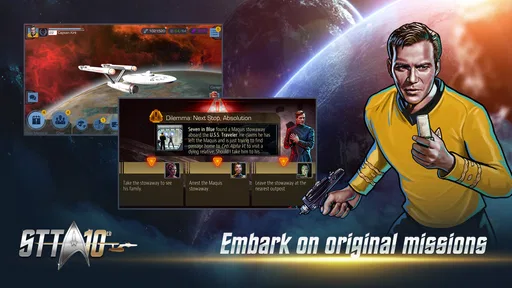
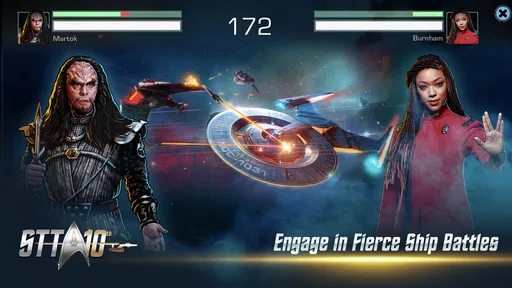
Our Review of Star Trek™ Timelines
 Analysis by Appyee
Star Trek™ Timelines is the kind of role-playing game I open when I want a recognizable science-fiction setting without committing to a long, uninterrupted session. It puts me in command of a starship, mixes exploration with combat, and builds its identity around the wider Star Trek universe rather than around a completely new space opera. My first impression was that it wants to be both a collection of familiar faces and a management game, so the appeal depends on whether you enjoy making small strategic decisions between story moments.
It is free to play and was developed by Tilting Point. The game has earned a 3.7 average from roughly 98 thousand ratings, with more than 5 million installs, which gives a useful picture of its position: it has a substantial audience, but it is not universally loved. I can understand that split. The setting is inviting, the presentation has a clear personality, and there is plenty to do, yet the long-term rhythm is designed around gradual progress rather than constant excitement.
The game is rated for Everyone 10+ and runs on Android 7.0 or later. Its current version is 12.2.1. Those details matter if you are installing it on an older device, although the more important question is whether its collection-driven structure suits you. I would recommend trying it if you like Star Trek, crew-building, light tactical choices, and games that can be checked in several times during the day. I would be more cautious if you want a fast action game with precise controls or a traditional role-playing adventure that moves forward at a steady pace.
A Starship Game That Starts With Mood Before Complexity
I find the game’s best quality is its atmosphere: it invites me to think like someone organizing a voyage, not a pilot chasing constant action. That makes the opening feel approachable, while leaving room to decide whether its slower, crew-focused rhythm suits me. The next section looks at how the setting and presentation give that rhythm its character.
The opening impression comes from identity, not spectacle
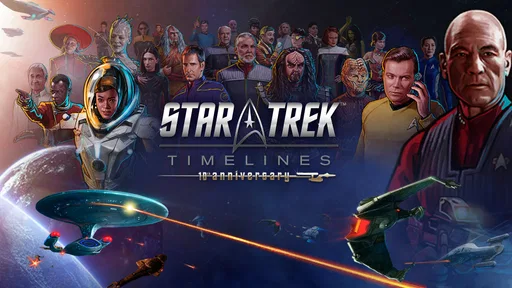
What stood out to me early was how quickly the game establishes a Star Trek mood. The interface, character presentation, ship imagery, and science-fiction framing work together to make the experience feel like a digital command console rather than a generic fantasy game with the names changed. That distinction is important. The game is not trying to imitate a military simulator, and it does not rely on realistic space physics to create tension. Its atmosphere comes from recognizable ideas: crews, missions, anomalies, diplomacy, exploration, and the possibility of bringing different eras and corners of the franchise into the same journey.
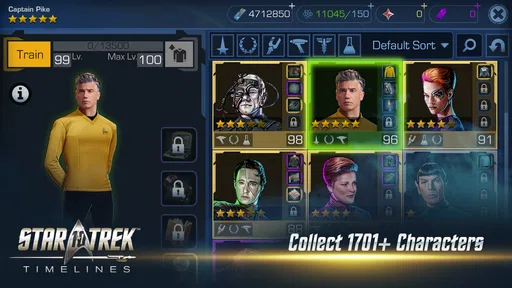
The art direction supports that approach. Characters are presented as collectible crew members, and the visual language makes each addition feel like part of a larger archive of Star Trek history. I found that this gave ordinary progression a little more meaning. Unlocking a new crew member is not only a numerical improvement; it can also feel like adding another piece to a personal version of the universe. That works especially well for longtime fans who enjoy noticing how different personalities and roles fit into a team.
At the same time, the presentation is more functional than cinematic. This is a game built to be read, tapped, managed, and revisited. It does not constantly push dramatic camera work or action-heavy animation. I think that is a strength for players who enjoy a calm command-room atmosphere, but it may disappoint anyone expecting a console-style space adventure. The game asks me to appreciate context and progression more than visual fireworks.
The setting gives routine tasks a reason to exist
Many free role-playing games can make missions feel interchangeable because their worlds are only decoration around rewards. Here, the Star Trek setting gives those routines a clearer emotional frame. Sending a crew into a situation, preparing a ship, or resolving a space encounter feels connected to the idea of a continuing voyage. Even when the underlying action is simple, the fiction helps it feel less anonymous.
That does not mean every task feels equally memorable. Some activities are clearly there to keep progression moving, and the repeated structure becomes easier to notice after extended play. My advice is to treat the game as an ongoing voyage rather than as a single dramatic campaign. It is more enjoyable when I accept that some sessions are about improving a crew or collecting resources, while other sessions deliver the story or atmosphere I came for.
A useful way to approach it is to choose a personal theme for your roster. You might prioritize a particular era, build around familiar captains, or focus on crew roles that make your preferred missions easier. The game becomes more personal when progression is not just about chasing the largest number. That is one of the less obvious strengths of the setting: it gives players a reason to make collection choices for emotional reasons as well as practical ones.
Art direction makes the collection loop feel coherent
The collectible structure could easily have felt like a disconnected parade of characters. Instead, the visual presentation keeps returning to the same broad language of starships, uniforms, space travel, and mission control. I noticed that this consistency matters more during longer sessions than during the first few minutes. It prevents the game from feeling like a random character catalogue and helps the different pieces belong to one setting.
There is also a pleasant contrast between the scale of the universe and the small decisions I make. The story may suggest a large galactic situation, but my practical role is often to select a crew, consider abilities, and decide how to spend limited attention. That contrast creates a believable command fantasy. I am not personally steering every turn of a starship; I am organizing the people and resources that make a mission possible.
Sound supports the bridge-like atmosphere
The sound design is not the main attraction, but it does useful work. Interface sounds and space-themed audio cues make taps and mission changes feel connected to a command environment. I found that the game’s mood is strongest when the sound is allowed to sit underneath the activity instead of trying to dominate it. The result is closer to a television episode’s supporting texture than to an action game soundtrack that constantly demands attention.
This suits the pacing. I can play while relaxing, checking progress between other activities, or settling into a longer session when I want to review my crew and missions. The sound helps maintain the fiction without making every small action feel urgent. If you prefer games that deliver a powerful musical hook or dramatic audio feedback for every attack, this may feel restrained. For me, that restraint matches the idea of managing a voyage.
The rhythm is deliberately uneven
The game’s rhythm moves between active decisions and waiting or routine management. A mission can provide a clear objective, but the broader experience is often about preparing for the next step, improving a roster, and returning later. That pacing is neither automatically good nor bad; it depends on what I want from a mobile game. It works well for short visits because I can make progress without needing a full evening. It works less well when I am looking for a continuous story with no interruptions.
One practical scenario explains the appeal. I might check the game during a commute, assign attention to a mission, review which crew members are ready for an upgrade, and close it before reaching my destination. Later, I can return to collect progress and decide what to do next. That pattern makes the game easy to fit around real life, but it also means the most satisfying session is rarely a nonstop chain of exciting battles.
I recommend resisting the urge to rush every available activity. When I treat each screen as something that must be cleared immediately, the game can start to feel like a list of obligations. When I choose one priority—advancing a mission, strengthening a useful crew member, or exploring a new part of the setting—the same systems feel more manageable. This is a small habit, but it makes a noticeable difference to the overall mood.
Combat is about preparation and timing more than direct control
The space combat is designed around command decisions rather than manual piloting. I am not flying through a three-dimensional battlefield with a virtual joystick. Instead, the interest comes from selecting an appropriate crew and using available actions at the right moments. That makes the game approachable, particularly on a phone, but it also limits the sense of physical involvement.
The best decisions often happen before the encounter begins. A crew member who looks impressive in isolation may not be the most useful choice for a particular situation. I learned to think about the mission’s demands first and then build a team around them, rather than automatically selecting the highest-looking options. This is one of the game’s more important strategic lessons: a balanced roster can be more valuable than a collection of individually attractive characters.
Another useful habit is to avoid spending every resource as soon as it appears. Keeping some flexibility lets me respond to a difficult mission or invest in a crew member who becomes valuable later. The game encourages collecting, but collection without planning can leave a roster broad and unfocused. I get better results when I choose a small group of dependable specialists, then expand gradually as new opportunities appear.
Role-playing progression is satisfying, but repetition is part of the bargain
The role-playing layer gives the game its long-term structure. Characters and ships become part of an evolving account, and each improvement can make future missions more comfortable. I like the sense of building a working organization rather than controlling one hero. It also gives fans a reason to keep returning, because the roster itself becomes a record of the player’s journey through the setting.
The weakness is that progression can sometimes overshadow the adventure. A mission may be interesting in concept, yet the practical response is still to strengthen the right crew, gather what is needed, and try again. Players who enjoy optimization will see depth in that loop. Players who want every mission to introduce a completely new mechanic may find it repetitive.
The game is therefore a better fit for someone who enjoys incremental improvement than for someone who dislikes collection systems. I would also skip it if I want a single-purchase experience with a clearly defined ending. The free entry point is convenient, but the long-term design naturally invites continued engagement and optional spending. In-app purchases range from $0.99 to $399.99 per item, so I would approach purchases carefully and decide on a personal limit before the collection loop becomes persuasive.
How it compares with other mobile role-playing games
Compared with action-focused space games, this one is calmer and more deliberate. You give up direct piloting and moment-to-moment reflexes in exchange for crew planning and a stronger sense of managing a Star Trek roster. Compared with traditional turn-based role-playing games, it places less emphasis on controlling a small party through a tightly staged adventure and more emphasis on collecting characters, preparing missions, and returning over time.
That comparison helps identify the right audience. If you want fast battles, a game built around direct touch controls will probably suit you better. If you want a deep character story centered on one protagonist, a conventional role-playing adventure may offer a more focused experience. If you want a Star Trek-flavored management loop where the crew and setting are the main attractions, this is a more natural choice.
I also think it has an advantage over generic collection games for one simple reason: the characters and ships carry a recognizable identity. That does not remove the frustrations of the genre, but it makes the routine more meaningful. I am more willing to review a roster or prepare another mission when the people involved feel connected to a universe I already understand.
Who will enjoy the atmosphere most?
Fans who enjoy Star Trek’s exploratory side are likely to get the most from the game. It is especially suitable for players who like reading mission context, organizing a crew, and watching a roster improve over time. It can also work for newcomers who enjoy science fiction but have not explored every part of the franchise, because the game presents its universe through characters, ships, and situations rather than requiring fast reflexes.
It is less suitable for players who want an entirely offline-feeling experience, uninterrupted action, or a short campaign that can be completed and put away. The game asks for patience. Its rewards are strongest when I return regularly and make considered choices, not when I try to force a dramatic payoff from every visit.
My final view of the playable mood
Star Trek™ Timelines succeeds because its art direction, sound, setting, and pacing point in the same direction. The visuals make the roster feel like a collection of people from a shared universe, the audio reinforces a quiet command-room mood, and the slower rhythm gives room for planning. The mechanics are not hidden behind that atmosphere; they are the way the atmosphere is maintained. I feel like I am organizing a voyage, not simply tapping through unrelated battles.
There is friction, especially in the repeated progression loop and the temptation to treat every resource as urgent. The game will not satisfy someone searching for hands-on space combat or a tightly paced role-playing story. Still, I found its combination of recognizable setting and manageable mobile sessions unusually easy to return to. The free price makes it simple to test, while the broad range of optional purchases means I would keep spending firmly under control.
My recommendation is straightforward: try it if the idea of assembling a Star Trek crew and guiding missions appeals to you more than personally flying a ship. Give it time to establish its rhythm, choose a progression focus, and judge it by the atmosphere of a continuing voyage rather than by the excitement of one battle. Its strongest quality is the way its mechanics preserve a calm, coherent Star Trek mood. For me, that makes it a worthwhile role-playing game for thoughtful short sessions, even though its collection-driven pacing will not be right for everyone.
Verdict
Strengths of Star Trek™ Timelines
- Deep roster of Star Trek characters from multiple series
- Strategic ship battles include useful crew and skill combinations
- Regular events provide new goals and limited-time rewards
- Story missions offer substantial content for long-term players
- Works well for fans who enjoy collecting and upgrading characters
Limitations of Star Trek™ Timelines
- Energy systems can slow progress during extended play sessions
- High-tier crew and ships may require significant spending or patience
- Menus and upgrade systems can feel overwhelming at first
- Some missions rely heavily on repetitive resource farming
- Online connection is generally required to access the game
Other Releases by Tilting Point
View All
SpongeBob Adventures: In A Jam
Simulation4.6

Warhammer: Chaos & Conquest
Strategy4.4

Avatar: Realms Collide
Strategy4.5
Similar Picks in This Category
View All
Hair Dye
CrazyLabs LTD4.4

Monster High™ Beauty Salon
CrazyLabs LTD4.5

Bus Simulator - Bus Games 3D
Jima Apps4.4

Flight Pilot: 3D Simulator
Wildlife Studios4.1


Super Stylist Fashion Makeover
CrazyLabs LTD4.4
Frequently Asked Questions
What is Star Trek™ Timelines?
Star Trek™ Timelines is a strategy role-playing game that brings together characters, ships, and locations from across the Star Trek universe. You can assemble a crew featuring familiar officers, travel through different eras, complete story missions, manage starships, and participate in space battles. The game combines narrative missions with collection, resource management, crew development, and competitive or cooperative activities.
Can I play Star Trek™ Timelines offline?
No. Star Trek™ Timelines is primarily an online game and requires an active internet connection for most of its features. Your progress, events, account data, purchases, and fleet activities are connected to the game’s servers. A stable Wi-Fi or mobile data connection is recommended, especially during battles, limited-time events, updates, and when synchronizing progress across supported devices.
Is Star Trek™ Timelines free to download and play?
Star Trek™ Timelines can generally be downloaded and played for free, but it includes optional in-app purchases. These purchases may provide premium currency, packs, resources, or other conveniences that can help with crew collection and progression. You can enjoy a substantial amount of content without paying, although advancing quickly or competing at higher levels may require patience or spending.
Which Star Trek characters and series are included in the game?
The game features a broad selection of Star Trek characters, ships, and settings inspired by multiple television series and films. Depending on the available content and events, you may encounter versions of officers from different timelines, crews, and eras. Character availability can change as new updates, campaigns, and special events introduce additional collectibles and themed rewards.
Does Star Trek™ Timelines support multiplayer or fleet gameplay?
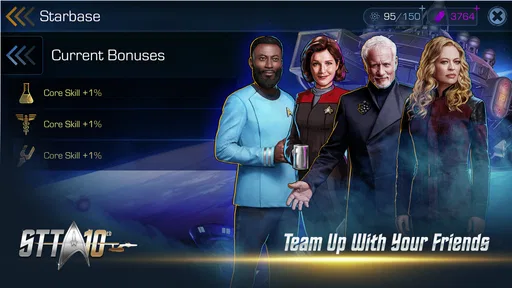
Yes. Star Trek™ Timelines includes social and competitive features that allow players to join fleets, communicate with other members, and participate in activities connected to the wider player community. Fleet involvement can provide additional objectives, rewards, and a sense of progression beyond the single-player missions. Some features may unlock gradually as your account develops.
Play our best games!


